

EcoCover® Environmentally Friendly Weed Matting is produced from waste paper that is removed from the landfill waste stream. The Weed Mat NZ products contain unique attributes that benefit the plant, soil and environment. The EcoCover fertiliser enriched Weed Mat is a cost-effective substitute for other mulch systems used in the horticultural, agricultural and land management industries. EcoCover Weed Matting is the world’s most complete plant mulch.
EcoCover is one of the few Weed Mat Suppliers dedicated to providing products that help sustain the environment and follow the rules of the three pillars of sustainability.
EcoCover’s patented Biodegradeable Weed Mat products build soil carbon levels, are organic, compostable and biodegradable, conserve water, reduce plant mortality, control weeds, promote plant and crop growth, moderate soil temperature, reduce soil erosion, sequester CO2, reduce plant losses, eliminate or reduce herbicide use, are a carrier of beneficial additives for the soil and save you money.
“EcoCover. It’s better than recycling, it’s more than just profit. It’s the responsible choice.”
Quickly find out how it works here
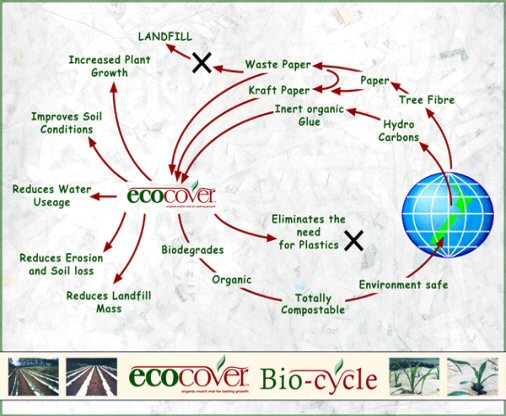
For further information and full research data on each of these properties please go to EcoCover Product Attributes.
EcoCover Mulch Mats and product derivatives are protected under International Patent Laws and have been certified by IFOAM accredited organic certification agencies and Environmental agencies for preferred procurement status. The manufacturing plant offers a unique, completely closed loop waste process.
Product Uses And Applications
- Livestock Bedding
- Floor Covering
- Broadacre Cropping
- Covers for Landfills
- Eco Pot Tops
- The Mat as a Carrier (for fertilizers and soil conditioners, to name just two)
- Eco Bags
- Mulch and Seed Mat (organic and non-organic agricultural applications)
- Packaging
- Moulded Shapes
- Building and Construction
The EcoCover Mulch Market Opportunity
The market is comprehensively wide and presently includes all:
- Field and Row Farmers – Organic and non-organic
- Tree and Vine Farmers – Organic and non-organic
- Forestry
- Other, e.g. landscaping, Local Bodies & Councils, retail, etc.
find out more about the
EcoCover Weed Mats Key Product Attributes
- Organic (a unique product attribute)
- 100% Compostable
- 100% Biodegradable
- Builds soil carbon
- Sequesters CO2 (a unique product attribute)
- Water Conservation (up to 80%)
- Weed Control
- Gardens and landscaping, orchards, forestry, nurseries and other weed problem areas
- Promotes Plant Growth
- Moderates Soil Temperature Fluctuations
- Erosion Control
- Herbicide Reduction or Elimination
- Reduces Plant Mortality
- Achieves 100% Zero Waste Objective
- Able to be used as a unique delivery mechanism.
The new EcoCover Fertilizer Enriched Mat is an excellent example where the mat is used as a carrier for an organic approved fertilizer, ensuring a cost effective application without wastage and overspray.
Research Has Proven EcoCover Will Likely Deliver
- Reduction of paper in landfill
- Reduction of plastic in landfill
- Reduction in water usage
- Reduction in plant loss and mortality
- Reduction in herbicide usage
- Reduction in soil and groundwater contamination
- Reduction in weeds and weed seeds
- Increase in soil carbon levels
- Increase in plant growth, quality and yield
- Increase in soil quality and health
- Improvement in the visual landscape
- Sequesters CO2 impacting on climate change
- A cost effective mulch
- A zero waste solution
- Possible cost savings in requiring fewer plants per sq.m.